Most common GDPR mistakes (and how to avoid them)
The most common GDPR mistakes do not result from a lack of documentation. They result from the fact that documentation is not used in practice.
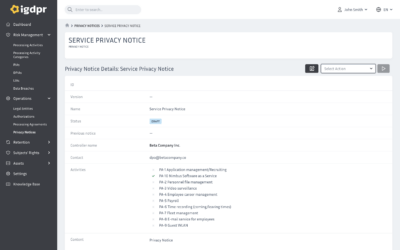
Organizations often have policies, procedures and templates in place. On paper, everything looks correct. In reality, however, employees do not follow those rules, documents are not updated, and no one is able to explain how personal data is actually handled.
This is where the real risk begins. Supervisory authorities do not verify what is written in documents. They verify how the organization operates.
Learn how to avoid these mistakes during GDPR implementation: How to implement GDPR in a small business – step-by-step guide
GDPR on paper vs GDPR in practice
One of the most common gaps in organizations is the difference between declared compliance and real operations.
Processes exist in documentation, but not in everyday work. Employees make decisions based on habits rather than procedures. Data flows are not fully understood, and responsibilities are unclear.
This is exactly where most GDPR mistakes occur.
Lack of control over access to data
In many organizations, no one can clearly answer a simple question: who has access to personal data and why.
Access is often granted “just in case” and rarely reviewed. When roles change, permissions are not updated. Over time, more and more people gain access to data they do not actually need.
This leads directly to violations of the data minimization principle.
Lack of process for data subject requests
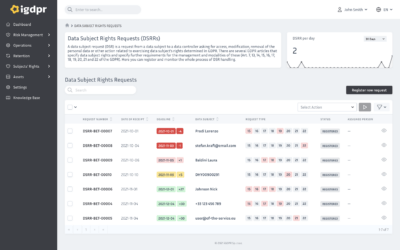
Requests for access, deletion or correction of data often arrive through regular communication channels such as email or contact forms.
The problem is that they are not treated as formal GDPR requests. They are not registered, not tracked and not assigned to a responsible person.
As a result, responses are delayed or incomplete.
And organizations are unable to demonstrate what actions were taken and when.
Lack of control over data retention
Personal data rarely disappears on its own.
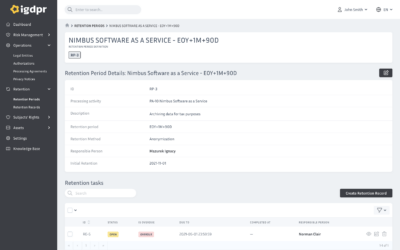
If an organization does not define clear retention periods, data will remain in systems for years — in CRM tools, email inboxes or backups.
The issue becomes critical when the organization needs to justify why certain data is still being stored.
This is one of the most frequently questioned areas during audits.
Missing data processing agreements
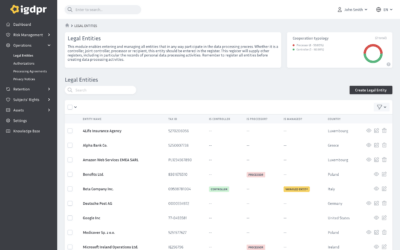
Modern organizations rely heavily on external providers — SaaS platforms, accounting services, IT vendors.
However, they often fail to assess whether personal data is being entrusted to those providers and whether appropriate agreements are in place.
This is a mistake that is both easy to identify and commonly found during inspections.
Lack of preparation for GDPR audits
As long as no audit takes place, many organizations assume everything is under control.
In reality, it is only during an audit that problems become visible.
Inconsistencies appear, documentation does not match reality, and there is no clear evidence of compliance.
This is when GDPR stops being theoretical and becomes a real issue.
Lack of a process-based approach
The most fundamental mistake is not related to a single area.
It is related to the overall approach.
GDPR is often treated as a one-time project — something to implement and close. In reality, it is an ongoing process that should function every day.
Without this mindset, organizations will always react only when problems occur.
And that is exactly why the same mistakes keep repeating.
Why do GDPR mistakes repeat?
Because GDPR is still treated as documentation rather than as a way of managing data.
As long as everything looks correct on paper, it seems that compliance is achieved. The problem appears when the organization needs to demonstrate how it actually works.
This is the moment when gaps become visible.
How to avoid GDPR mistakes?
Avoiding GDPR mistakes is not about creating more documents.
It is about organizing processes, assigning responsibility and maintaining control over how data is handled.
Organizations that succeed in this area move away from static documentation and adopt a more structured approach.
They treat GDPR as part of daily operations, not as a one-time obligation.
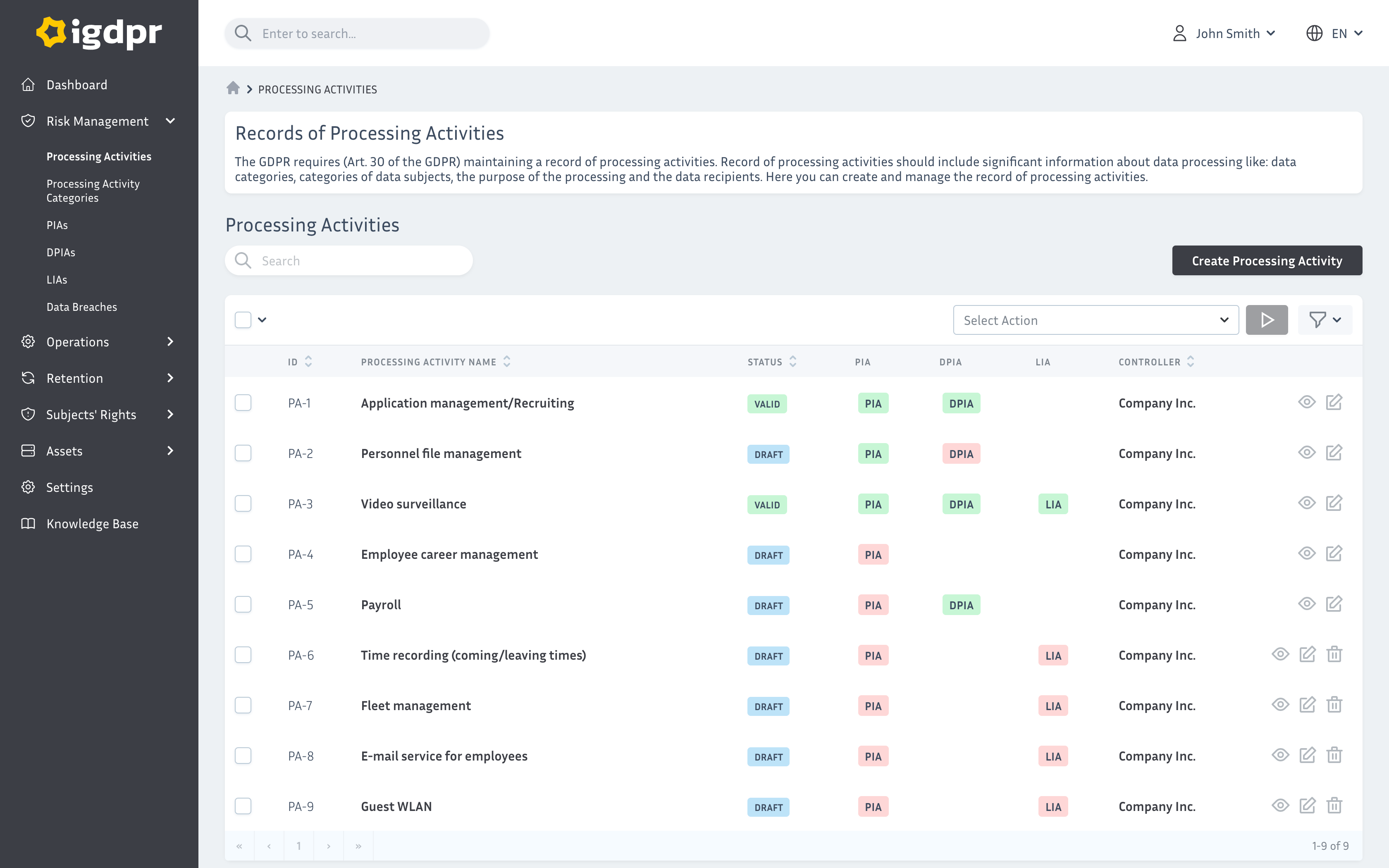
See how to organize GDPR processes and avoid the most common mistakes
Summary
The most common GDPR mistakes are not caused by a lack of knowledge. They are caused by a lack of structure, process and control. Organizations that rely only on documentation eventually lose oversight of their data. The key is to turn GDPR into a working system, not just a set of documents.