How to implement GDPR in a small business – step-by-step guide
Implementing GDPR in a small business often feels overwhelming. The regulation is complex, the terminology is unclear, and many organizations assume they need external consultants to get started. In reality, most of the difficulty does not come from the law itself, but from the lack of a clear process.
GDPR is not a single task. It is a way of organizing how data is handled.
Where most businesses get it wrong
Many organizations approach GDPR as a one-time project. They create documentation, download templates, and assume the job is done. For a short time, everything appears to be in place. But as the business evolves, new tools are introduced and processes change, the documentation quickly becomes outdated.
This is where compliance breaks down.
In practice, GDPR is not about having documents. It is about understanding how data flows through the organization and being able to control it.
What GDPR implementation really means
At its core, implementing GDPR is about answering a few fundamental questions:
- what personal data you collect
- why you collect it
- where it is stored
- who has access to it
- how long it is retained
These elements form the foundation of compliance and are reflected in key GDPR requirements such as data mapping, lawful basis and documentation
Without this understanding, everything else becomes guesswork.
GDPR implementation is not about complexity
One of the biggest misconceptions is that GDPR requires complex legal or technical solutions. In reality, most small businesses already perform many of the required activities — they collect data, use systems, communicate with customers. The challenge is not doing something new, but organizing what already exists.
GDPR is about structure, not complexity.
How GDPR implementation works in practice
A practical approach always starts with understanding your data.
Organizations need to identify what data they process and how it moves through their systems. This creates visibility and allows them to detect risks and gaps. From there, they can define legal bases, update policies and establish clear rules for handling data.
Over time, this evolves into a structured process that includes:
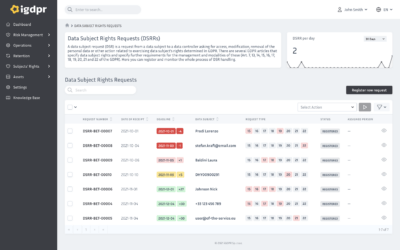
- handling data subject requests (Learn how to handle data subject requests (DSAR) in practice:
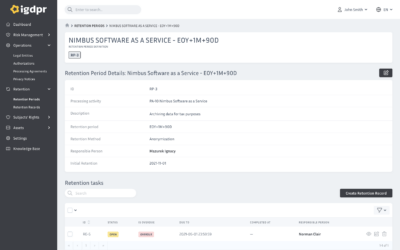
How to handle DSARs under GDPR) - managing data retention (See how to define retention periods and manage data lifecycle:
GDPR data retention – how long can you store personal data?) - controlling access (Understand how to manage access and user permissions under GDPR:
GDPR access control – managing user permissions) - documenting processing activities (See how to create and manage a Record of Processing Activities (ROPA):
Record of Processing Activities (ROPA) – template and example)
These are not separate tasks. They are connected elements of one system.
The turning point: from documents to processes
The key moment in GDPR implementation is when the organization moves from documents to processes. Instead of asking “Do we have this policy?”, the question becomes: “Do we actually follow it?”. This shift changes everything.
Once processes are defined, responsibilities become clear, actions are repeatable, and compliance becomes manageable.
Do you need external consultants?
Many small businesses assume that GDPR implementation requires external support. In reality, most organizations can build a solid foundation on their own, as long as they understand their data and processes. External expertise can be helpful, but it is not a prerequisite.
What matters more is having a clear, structured approach.
Why implementation often fails
GDPR implementation fails not because it is too difficult, but because it is treated as a one-time effort. Without ongoing updates, even the best documentation becomes outdated. New systems, new employees and new processes introduce changes that are not reflected in existing materials.
Over time, the gap between documentation and reality grows.
How to keep GDPR under control
Organizations that manage GDPR effectively do not rely on static documentation. Instead, they treat GDPR as part of everyday operations. Processes are monitored, responsibilities are assigned, and changes are reflected continuously.
This creates a system where compliance is maintained over time, not just declared.
And this is what makes GDPR sustainable.
GDPR as a structured system
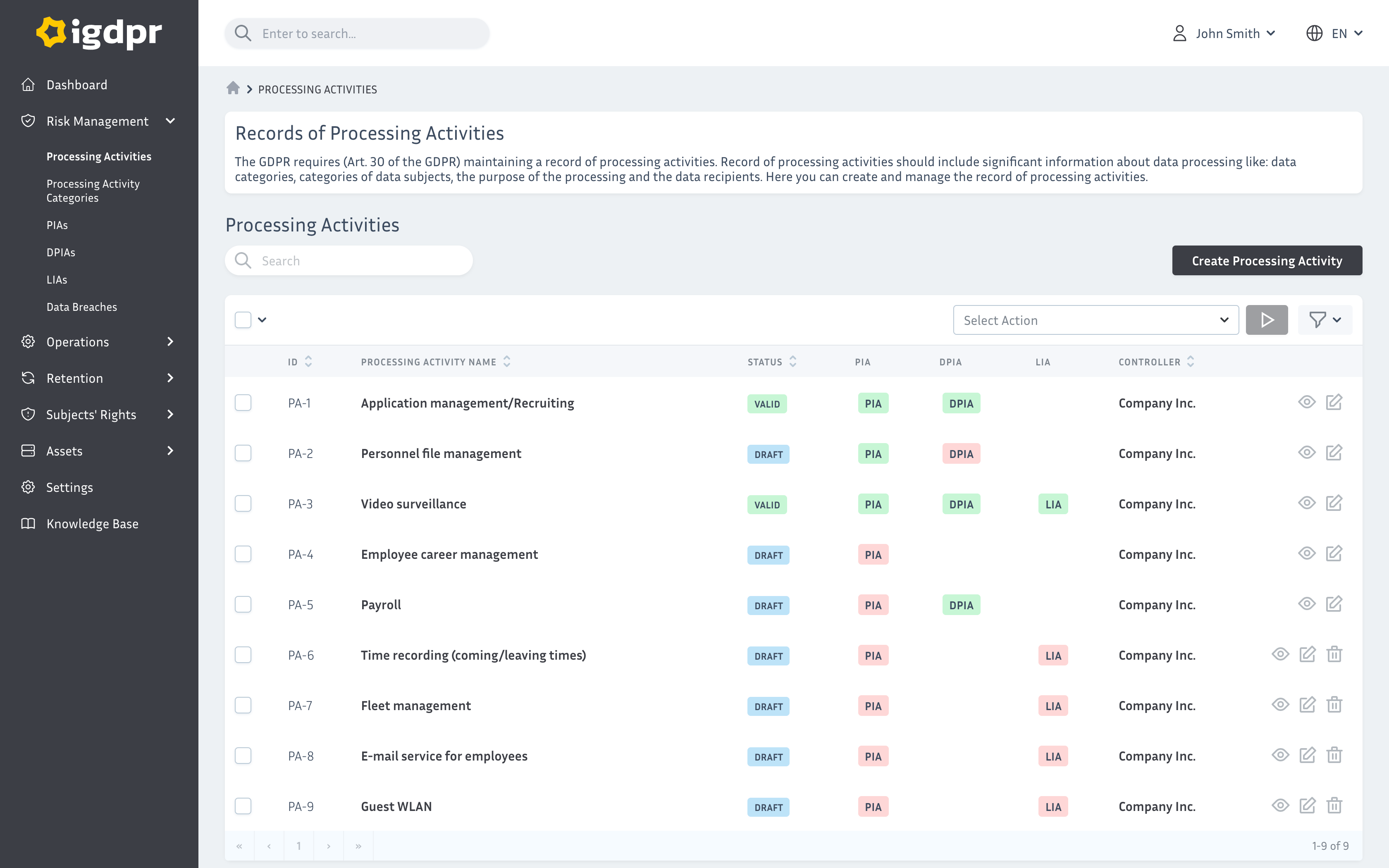
GDPR implementation becomes significantly easier when treated as a structured system rather than a collection of documents. Processing activities, risk assessments, data retention, access control and data subject requests all need to work together. When these elements are connected, organizations gain visibility and control.
This is where compliance becomes practical.
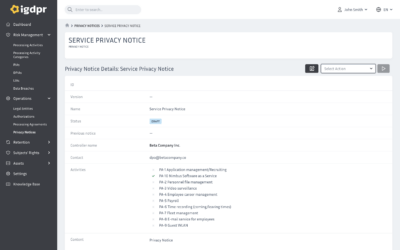
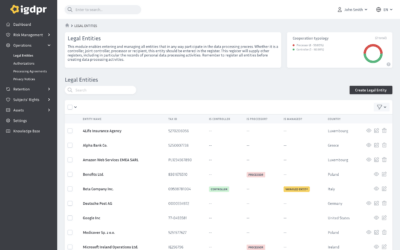
See how to implement GDPR, organize processes and manage compliance in one system
GDPR and audits
Even in small businesses, GDPR compliance may be verified. Authorities expect organizations to understand their data, justify their decisions and demonstrate how processes work in practice.
This is why implementation is not about preparation for a single moment, but about ongoing readiness.
Summary
Implementing GDPR in a small business is not about creating documents. It is about understanding data, organizing processes and maintaining control over time. Organizations that treat GDPR as a one-time project will struggle to maintain compliance. Those that approach it as a system will be able to manage it effectively.
The difference lies in whether GDPR is treated as paperwork or as a way of operating.